
In-Home Care Services & Daily Support
Personalized home care services for seniors and adults who need dependable support with daily living, companionship, mobility and everyday routines — while continuing to live in the place they know best.
Or Call (672) 896-2000
Care Services
View all care services
In-Home Care
Specialized Care
Facility Support
Sometimes the signs are obvious.
A hospital discharge. A fall. A new diagnosis.
But more often, families come to us
because of a growing feeling that something has changed...
- Mom seems more tired than she used to be.
- Dad isn't getting out as much anymore.
- The house is a little harder to manage.
- Meals are simpler. Appointments get missed.
Conversations start including phrases like:
"I'm fine." "Don't worry about me." "I can manage."
And perhaps they can.
But deep down, you may be wondering whether everyday life has
become more difficult than they're willing to admit or letting on?
That uncertainty is where many caregiving journeys begin.
At Adiva Care, we help families across Greater Vancouver
and the Lower Mainland navigate that stage
with compassionate home care services.
Our personalized in-home support is designed
to preserve independence, maintain dignity, and bring
peace of mind to everyone involved.
If this feels like the kind of support you or your loved one may benefit from,
let's have a conversation.
Answer a few quick questions so we can understand your needs and suggest the right next step.
The Goal Is Rarely More Home Care.
It's Maintaining Independence at Home
When families contact us, they rarely say: "We need in-home care."
They usually say things like:
- "We want Mom to stay in her own home.",
- Or "dad values his independence.",
- And sometimes.."we're trying to figure out what kind of help is actually needed."
The goal isn't care itself. The goal is maintaining a life
that already feels familiar.
The home they've lived in for years. The routines they enjoy.
The neighbourhood they know. The independence they value.
Care simply becomes one of the tools
that helps make that possible.
The right support doesn't replace independence. It often protects it.
That’s why our caregivers focus on providing
the support each person actually needs - no more, no less.
The goal is simple: help them stay safe, comfortable,
and independent, so they can continue living life on their own terms.
That philosophy guides everything we do at Adiva Care,
helping people continue living safely and independently in their own homes.
If you're not sure whether now is the right time for support,
that's okay too.
Many families reach out simply to ask questions,
talk through a situation, or get a better sense of
what options are available.
A friendly conversation can often provide the clarity
and reassurance you need to take the next step, whenever that feels right.
Why Families Often Wait Longer Than They Should to Seek Home Care Support
Many families assume there will be one clear moment
when the decision becomes obvious.
One event. One crisis. One unmistakable sign.
But real life rarely works that way.
What we typically see is a collection of small changes
that gradually add up:
- Personal hygiene becomes more difficult
- Household tasks start piling up
- Mobility becomes more challenging
- Meals become less balanced
- Medication schedules become harder to manage
- Social engagement begins to decline
Each change seems manageable on its own.
Together, they can significantly affect safety,
wellbeing, and quality of life.
The earlier support is introduced, the easier it often becomes
to maintain independence and prevent larger challenges
from developing later.
What In-Home Care Can Look Like
Every individual is different.
Some clients need only a few hours of support each week.
Others benefit from daily assistance.
Many simply need an extra set of hands for the tasks
that have become physically demanding or emotionally exhausting.
Our care plans are personalized
around each client's needs, preferences, and goals.
Support includes:
Personal Care Assistance
Daily personal care routines play an important role
in maintaining comfort, confidence, and dignity.
Our caregivers can assist with:
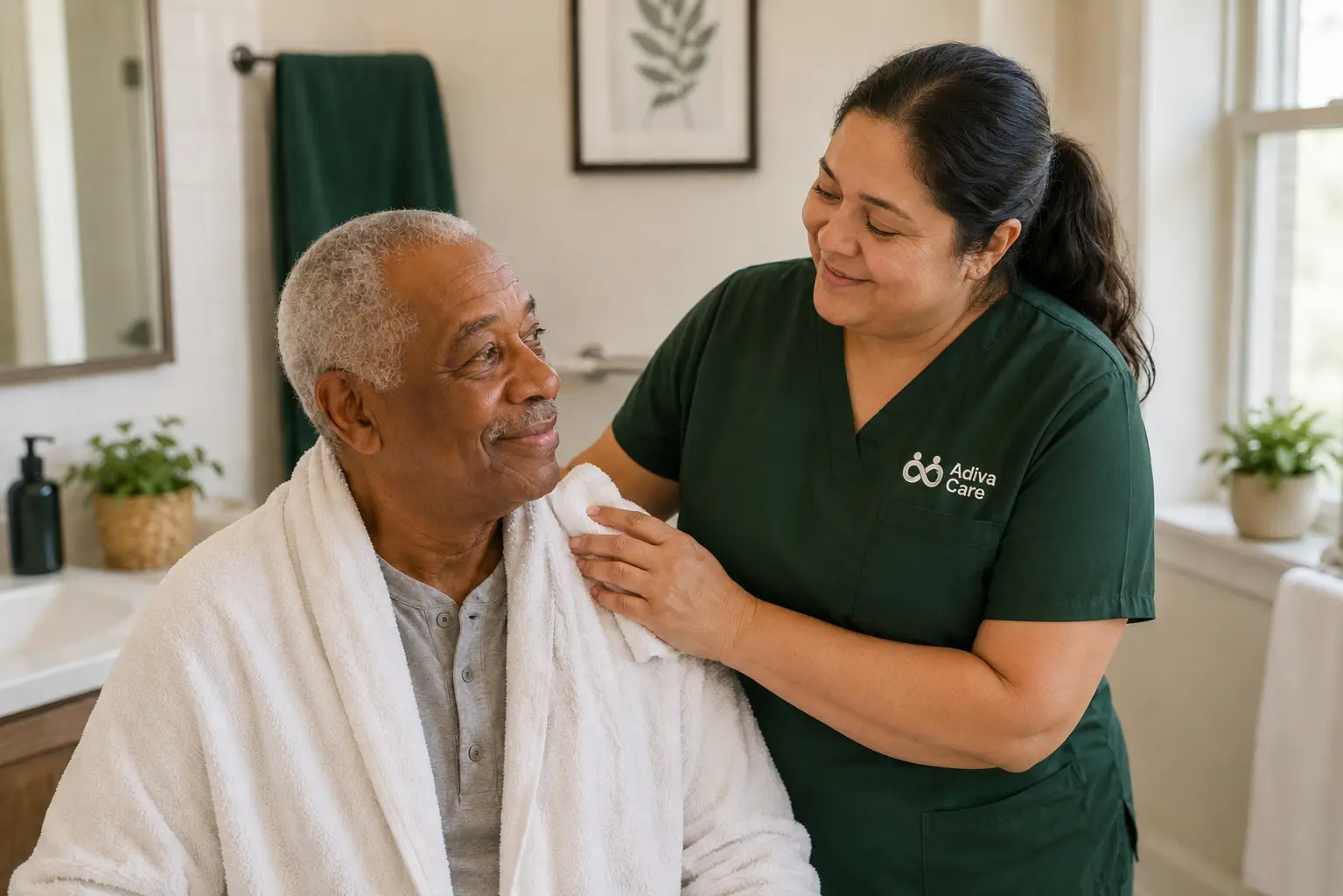
- Bathing and showering
- Dressing and grooming
- Personal hygiene
- Toileting and incontinence support
- Medication reminders
- Morning and evening routines
We provide support respectfully and sensitively,
always encouraging people to maintain as much control
and self-sufficiency in their daily lives as possible.
Companion Care
Loneliness can impact emotional and physical wellbeing
just as much as health challenges.
Companion care focuses on meaningful human connection
and social engagement.
Our Companion Care service includes:
- Friendly conversation
- Shared activities and hobbies
- Games and mental stimulation
- Walks and outings
- Accompaniment to appointments
- Grocery shopping and errands
Sometimes what matters most is
simply knowing someone genuinely cares.
Home Support Services
A safe and comfortable home environment contributes
significantly to overall wellbeing.
We can assist with::
- Meal preparation
- Nutrition support
- Light housekeeping
- Laundry
- Household organization
- General daily household tasks
These services help reduce stress while making everyday living
more manageable.
Mobility & Safety Support
Reduced mobility can increase the risk of injury, isolation, and loss of confidence.
Our caregivers provide assistance designed to help clients move safely and comfortably by assisting you with:
- Walking assistance
- Mobility support within the home
- Transfers and positioning
- Fall prevention support
- Safety supervision
- General daily household tasks
While this service helps with movement, what it helps achieve is
helping clients continue participating in life with confidence.
More Home Care Options as Needs Change
Home care needs rarely stay the same. A person may begin with
companion care or help around the home and later benefit from more frequent
or more specialized support.
Adiva Care's home care services also include:
Respite Care:
Relief for family caregivers who need time to rest, work,
or attend to other responsibilities.
Overnight Care:
Reassurance and assistance during the night.
24-Hour and Live-In Care::
Continuous or extended support when needs
are more complex
Dementia and Alzheimer's Care:
Familiar routines, safety support, and compassionate
assistance for people living with memory changes.
Post-Hospital and Post-Surgery Recovery Care:
Practical help while a person regains strength and confidence at home
Palliative Care:
Comfort-focused support for the person
and family during a serious illness.
Disability Care:
Personalized assistance that supports choice,
dignity, and participation in daily life.
Condition-Specific Support:
Care for people living with diabetes, cancer,
Parkinson's disease, ALS, or MS.
These home care options can be adjusted as needs change,
so support continues to fit the person rather than forcing the person
to fit a standard plan.
Who Can Benefit from Care at Home?
Senior home care is an important part of what we provide,
but private home care is not only for seniors.
Home care may help:
- Seniors and older adults who want to age safely
in familiar surroundings. - Adults living with disabilities who need help
with daily routines. - People managing chronic or progressive conditions.
- Individuals recovering after hospitalization, illness,
injury, or surgery. - Family caregivers who need respite
and dependable backup.
Whether someone needs companionship, mobility assistance,
safety supervision, or practical help at home, care does not have to
begin with a crisis. A small amount of help for seniors at home
can often make daily life feel safer, calmer, and more sustainable
or the whole family.
The Independence Dilemma
One of the biggest concerns we hear is:
"If we bring in help, will Mom feel like she's losing control
over her daily life?"
It's a reasonable concern.
Many seniors associate accepting assistance
with giving up control.
But we've found the opposite is often true.
One of the most meaningful benefits of home care for seniors
is that the right help can protect the independence they fear losing.
When daily tasks become easier to manage,
people frequently regain confidence and conserve energy
for the activities that matter most.
Instead of struggling through every task alone,
they can focus on enjoying family, hobbies, friendships,
and everyday life.
The right support should enhance independence, not diminish it.
Choosing a Home Care Provider That Feels Right
If you are comparing a senior home care agency,
an individual home care aide, or other private home care services,
look beyond the schedule.
The right home care provider should take time to understand
the person behind the care plan - their routines, personality,
preferences, concerns, and goals.
Ask how the provider approaches:
- The initial care assessment
- Caregiver matching
- Flexible care schedules
- Short-term and ongoing care
- Family communication
- Changes to the care plan as needs evolve
For families looking for in-home caregivers for seniors or adults
a good match matters.
Care should feel dependable and professional, but it should also feel comfortable, respectful, and human.
How We Create a Personalized In-Home Care Plan
Every family's situation is unique.
That's why we begin with a conversation.
Our process typically includes:
Initial Consultation:
We take time to understand your concerns, goals,
and current situation.
Care Assessment:
We identify areas where support could improve safety,
comfort, independence, and quality of life..
Caregiver Matching:
We carefully match caregivers based on personality,
needs, and preferences.
Personalized Care Plan:
A customized plan is created around your loved one's
specific circumstances, whether they need occasional home care
support or more regular assistance.
Ongoing Communication & Support:
As needs evolve, care plans can be adjusted to ensure continued support and peace of mind for the family.
Areas We Serve
Adiva Care provides private home care services
across selected communities in Greater Vancouver
and the Lower Mainland, BC, including:
- Surrey
- South Surrey
- Cloverdale
- White Rock
- Delta
- Vancouver
- Langley
- Burnaby
- New Westminster
- Richmond
- Coquitlam
- Maple Ridge
If your community is not listed, contact us to ask
whether home care is available in your area.
Frequently Asked Questions About Home Care
What are home care services?
The simplest home care definition is personalized support provided in a person's own home. Services may include personal care, companionship, home support, mobility and safety assistance, medication reminders, respite, overnight care, recovery support, or around-the-clock care, depending on the person's needs.
Is Adiva Care a non-medical home care agency?
Adiva Care provides primarily non-medical home care. Our caregivers focus on daily living, routines, companionship, comfort, safety, and independence. If you are unsure whether your loved one's needs fit our services, we can talk through the situation with you.
How much home care assistance can we arrange?
Every care plan is different. Some clients need a few hours of home care support each week, while others benefit from daily, overnight, live-in, or 24-hour care. We begin by understanding what would be genuinely helpful.
Is private in-home care only for seniors?
No. Private in-home care, sometimes called private-duty home care, is often associated with senior home care, elderly home care, or geriatric home care. But support at home can also help adults living with disabilities, chronic conditions, illness, injury, or the effects of a hospital stay.
What is the difference between a home caregiver and a home care aide?
These terms are often used broadly. The exact role depends on the person's needs, the care plan, and the caregiver's training and scope. Adiva Care focuses on matching the right caregiver to the right situation and clearly defining the support to be provided.
A helpful first step
Need Help Choosing the Right Care?
Tell us what you’re noticing. We’ll help you understand what kind of support may fit.
- Free, no-pressure conversation
- Care shaped around the person
- Caregiver matching and ongoing communication
(672) 896-2000
Take the first step
Ready To Find The Right Caregiver?
Answer a few quick questions so we can understand your needs and suggest the right next step.